
BREAKOUT SESSIONS | CONNECTING WITH PURPOSE

New Principal MNSAA Orientation.
New Principal MNSAA Orientation.
Walk participants through the process of preparing for an on-site visit.
Walk participants through the process of preparing for an on-site visit.
This session dives into practical approaches to developing and maintaining your school’s strategic plan. We will share practical tools that make this integral part of your school seem much more manageable… and maybe even exciting!
This session dives into practical approaches to developing and maintaining your school’s strategic plan. We will share practical tools that make this integral part of your school seem much more manageable… and maybe even exciting!
Generation Z is unraveling. As adults, we need to significantly change how we raise, mentor, and interact with the next generation. Young people need to know they are Strong, not fragile; responsible, not self-absorbed; and that, at their core, they have intrinsic dignity… They are Precious, not Perfect.
This presentation draws on outside experts and offers practical tips you can use in your next interaction with a young person in your life. It is suited for any group working with young people (parents, educators, youth workers, etc.).
In mission-driven schools, many of us avoid hard conversations because accountability feels like it betrays grace. So deadlines slide, problems go unaddressed and our best people quietly burn out.
The fix starts long before the conversation. When a school is explicit about who it is and who it isn’t, with clear core behaviors and clear performance expectations, those expectations can be built into everything: how you hire, how you welcome fit families, and how you lead day to day.
Casey shows how a simple scorecard for every role, and a clear picture of a fit family, turn accountability into an act of care. Then when someone misses the mark, the conversation isn’t out of the blue. It’s grounded in what everyone already agreed to, and it can be honest, short and loving.
Participants will:
– See why avoiding accountability damages the very relationships it is meant to protect
– Define clear behavior and performance expectations for any role, and what a fit family looks like for their school
– Learn how to build those expectations into hiring and enrollment, so every hard conversation starts on common ground
Strong school communities are rooted in relationships, and those relationships move at the speed of leadership.
It’s a domino effect: the leader’s relationship with the leadership team shapes the team’s relationship with faculty and staff, and that shapes everything families feel. When everyone is singing from the same hymnal, the whole school grows stronger.
Yet most school leaders, whether a head of school, a president, or a principal leading an elementary, middle or high school, are working harder than ever and still feel like everything runs through them.
The problem isn’t effort. It’s order. In this practical session, Casey walks through six common mistakes that keep good leaders stuck, then shows the order that fixes them: Seats (the right people owning the school’s key functions), Outlook (a clear view of your real numbers) and Strategy (a one-page plan with 90-day goals). Get the leadership in order, and the whole school follows.
Participants will:
– Spot which of the six mistakes is costing their school the most
– Sketch a simple function chart that spreads the load beyond the principal
– Leave with two free tools: a Function Chart and Seat Scorecard, and a Cost-per-Student and Break-Even Worksheet
Too many schools are stuck on a hamster wheel: busy for busyness’ sake, playing whack-a-mole with the same problems, fixing the blame instead of fixing the process.
Teachers and principals end the year exhausted and can’t point to much that actually moved the school forward. Sit in a school’s meetings and you’ll learn almost everything about its health.
This session introduces a simple leadership rhythm (a short daily huddle, a weekly team meeting, monthly and quarterly check-ins and an annual planning day) that works ON the school, not just in it. Problems get traced to their root causes and carried up to quarterly and annual planning, and the wins flow back to everyone.
The result is a cohesive team with clarity, a shift from scarcity to abundance, and people who thrive because they can see the success and know they helped make it happen.
Participants will:
– Spot whether their school is fixing the process or fixing the blame, and where their own time really goes
– Map a weekly, monthly and quarterly rhythm that fits a thin staff
– Leave with one change to make before Christmas break
Life can feel chaotic. As educators, administrators, students, parents, and guardians, we are constantly surrounded by demands, expectations, problems, and people who need something from us. When everything feels important, how do we know what matters most?
For more than 20 years, Paul Freid, his wife Sara, and his family have shared their home and community with people experiencing homelessness and other profound crises—all while raising a family, running a regenerative farm, and working outside the home.
Along the way, they have experienced incredible moments of growth, unexpected joy, heartbreaking loss, and plenty of uncertainty. Those experiences have taught them some important lessons about courage, compassion, community, and the difficult work of deciding what truly matters.
In Courage Amidst the Chaos, Paul shares stories from this unusual life and invites us to consider a simple but challenging question:
When life feels overwhelming, how do we find the courage to focus on what matters most?
This talk is designed for Catholic school communities and can be adapted for students, parents and guardians, faculty, staff, or administrators. It offers a practical and deeply human reflection on living with courage, responding to people in crisis, and building a community rooted in the Gospel.
The culture we live or work in impacts our experience as well as our personal and professional development.
This session presents four components of a healthy and effective culture that creates high levels of safety, trust, and belonging.
When these components are present, enjoyment, potential fulfillment, and high performance are more likely to occur:
(1) everyone’s first job is to help others succeed,
(2) communicate ‘you matter,’
(3) honor the absent, and
(4) see the problem, own the problem.
It also presents a tool for assessing the degree to which these components exist in a culture.
Being more aware of our inner lives can make our interactions with the outer world a better experience.
This session focuses on becoming aware of our thinking, so we know when it is working in our best interest and when it is not working. It explores:
(1) the conditions that come up in our life that invite us to go Below the Line,
(2) indicators telling us when we are Below the Line,
(3) how to handle Below the Line experiences with more grace and dignity and
(4) how to trampoline back Above the Line.
This session will address new and perennial legal issues facing private schools, including the rapidly evolving use of artificial intelligence by employees, student and employee discipline, accommodation requests, and challenging parent disputes.
The session will focus on practical strategies for navigating these issues while managing legal risk.
A school’s culture is shaped in the small, everyday moments between leaders and the people they serve.
This interactive session begins with an experience that helps participants see and feel how emotions influence their decisions, relationships, and impact on others. From there, participants will explore practical emotional intelligence strategies for managing themselves under pressure, responding instead of reacting, and creating Meaningful Micro Moments.
School leaders will leave with simple tools they can use immediately to strengthen relationships, navigate challenging conversations, and help build a culture where people feel valued, supported, and ready to do their best work.
School culture isn’t built through a mission statement on the wall. It’s built through everyday interactions, traditions, expectations, and relationships. Discover small, intentional practices that help students, staff, and families feel connected, valued, and part of something special.
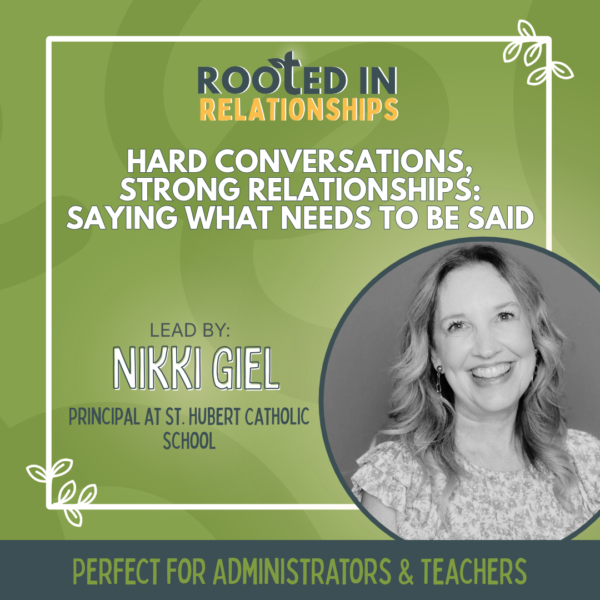
Whether it’s a conversation with a parent, colleague, or student, educators and administrators often face situations where the message is difficult but necessary. Learn how to communicate with warmth, clarity, confidence, and compassion without avoiding accountability.
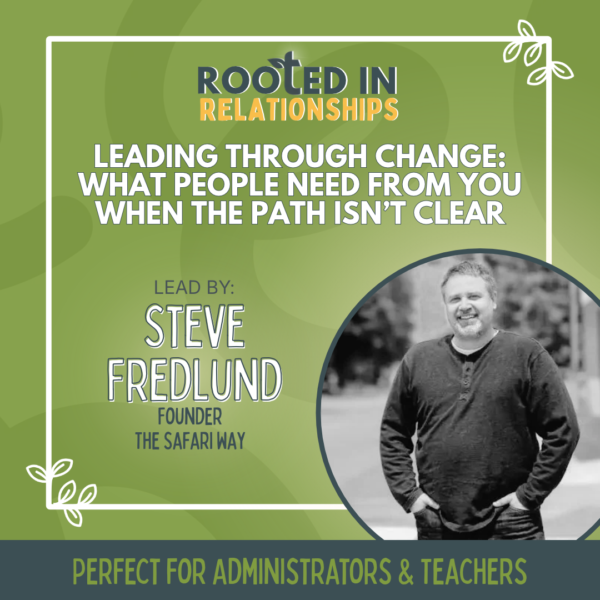
When change creates uncertainty, people look to their leaders for more than answers. They need honesty, connection, and someone willing to listen.
In this interactive session, Steve Fredlund combines memorable safari stories with practical leadership insights to explore what school leaders and educators can do when the familiar playbook no longer fits. Through reflection and conversation, participants will consider how to show up authentically, strengthen trust, and approach difficult conversations with curiosity.
Participants will leave with small, specific actions they can use to support colleagues and build stronger school communities, even when they don’t know what comes next.
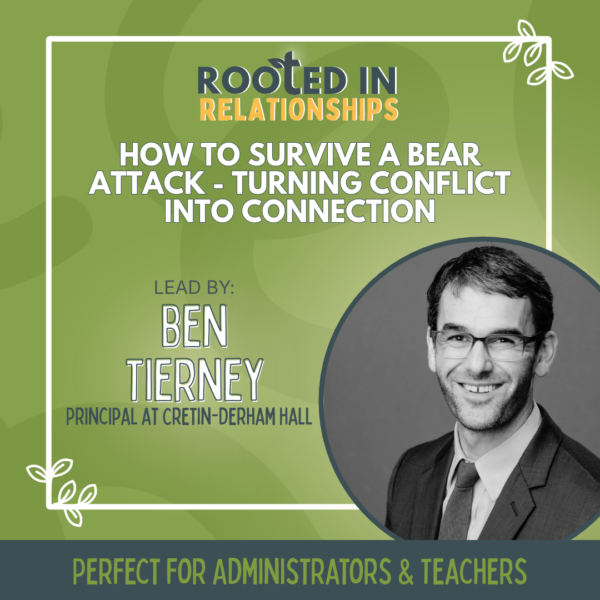
Conflict is inevitable—but it doesn’t have to be destructive.
In this highly interactive session, participants will explore a framework for identifying and navigating “bear attacks” (challenging conversations) with their team, parents and external partners. We’ll examine how to proactively build trust and understanding, recognize when tension arises, and use practical tools to turn potential conflict into opportunities for relationship and clarity.
Attendees leave with strategies to communicate with greater confidence, empathy, and purpose.
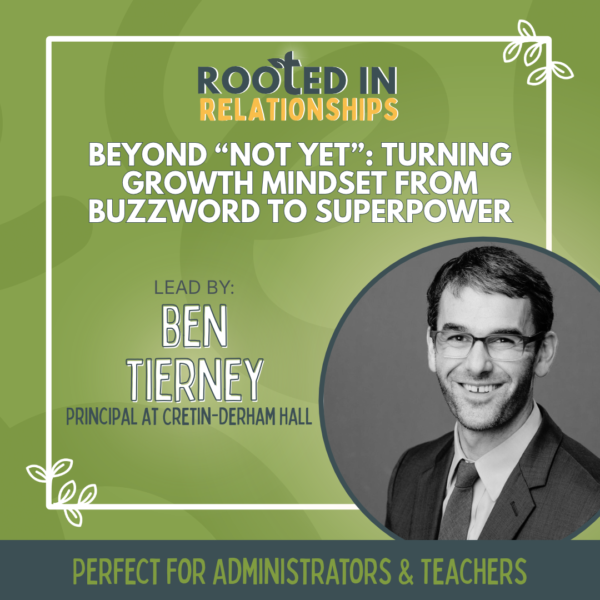
Everyone has heard of a growth mindset. But what does it actually look like in practice? And how do we move beyond simply encouraging people to “try harder” or “keep a positive attitude” to genuinely creating environments where growth mindset thrives?
In this highly interactive session, participants will challenge their own assumptions about growth mindset, explore the differences between fixed and growth mindsets, and examine five core messages that can transform how we approach learning, leadership, and challenges. Through reflection, discussion, and hands-on activities, participants will discover practical strategies for making growth mindset more than a slogan—turning mistakes into opportunities, challenges into catalysts, and everyday interactions into opportunities for growth.
Participants will leave with concrete strategies they can immediately apply in their own organizations.
We spend years learning how to run schools/companies — but almost no time learning how to lead humans.
This breakout is for educators who want more than survival and compliance; it’s for leaders who care about connection, culture, and the legacy they’re building every single day. You’ll walk away with leadership tools you can actually use on Monday — short videos, simple lessons, and practical activities that strengthen confidence, human connection, and gratitude in both adults and students. Nothing fluffy. Nothing theoretical. Just real tools that work in real schools. (And yes — there may be a few free things along the way.)
If you’re tired of initiatives that don’t stick and ready to lead in a way that actually lasts, this session is for you.
For years, schools have marketed academic excellence, small class sizes, dedicated teachers, and preparing students for the future. While those things are incredibly important, the conversations we’re having with prospective families are changing.
Parents want to know their children will make friends, feel supported, and belong in a community. So how do we make sure our marketing and admissions efforts reflect what families are actually looking for?
In this session, we’ll cover what’s working (and what’s not) in school marketing and admissions. We’ll look at everything from websites and social media to school tours, family communication, and retention. We’ll also share ways to tell your school’s story, build stronger connections with prospective families, and make the most of the resources you already have.
Walk away with ideas you can take back to your school and start using right away, whether you’re a one-person admissions office or part of a larger team.